
Audio Guest Book for Weddings at Your Venue
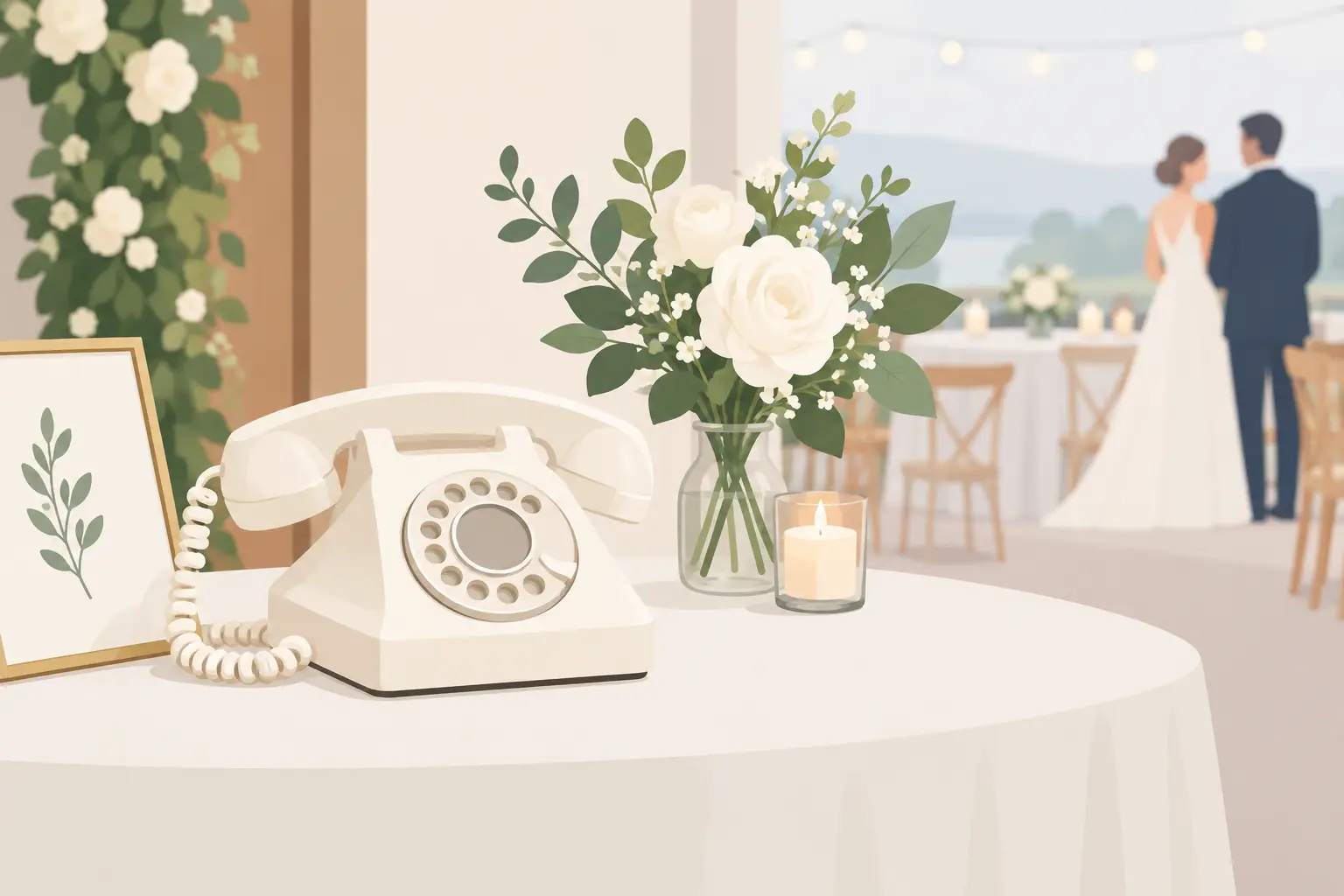
The warmest wedding messages are rarely the ones written after a queue forms around a traditional guest book. They are the laugh from an old university friend, a grandparent’s familiar voice, or the spontaneous advice offered after dinner. An audio guest book for weddings gives couples those moments in a format they can return to for years, while giving venues a distinctive, design-led feature that feels considered rather than complicated.
For hotels, country houses, event spaces and wedding planners, the appeal is straightforward: a vintage-style telephone creates a memorable focal point, encourages interaction and requires little explanation. But the most successful installation depends on more than an attractive handset. Location, power, recording instructions and handover procedures all shape whether the guest book becomes a treasured part of the day or a detail guests overlook.
Why venues are choosing an audio guest book for weddings
Wedding couples are increasingly looking for personal touches that do not feel manufactured. An audio guest book brings together familiar telephone design and a genuinely modern purpose: recording voice messages for the newlyweds. The format is intuitive. Guests lift the handset, hear a greeting, leave their message and replace it when finished.
For a venue, it is also a practical way to add character without changing the flow of the reception. Unlike an activity that needs staffing or a separate room, a telephone-based guest book can sit naturally in a lounge, entrance area or reception space. Its visual presence does much of the work. People recognise a classic telephone immediately, then become curious about what it does.
That combination matters in properties where interiors are central to the wedding proposition. A well-chosen unit can complement heritage details, bold contemporary schemes or boutique styling without looking like generic event equipment. Retro does not mean dated. The familiar form gives guests confidence, while the recording function delivers a keepsake suited to a modern celebration.
There is a commercial benefit, too. A venue that offers a distinctive guest experience has another meaningful point of difference for show rounds and wedding packages. It need not replace photographers, videographers or written stationery. It offers a complementary moment of participation, particularly for guests who might not want to be photographed but have plenty to say.
Placement determines participation
An audio guest book is most effective where guests naturally pause. The entrance to the wedding breakfast, a reception lounge just beyond the bar, or a quieter corner near evening refreshments can all work well. The ideal position is visible enough to invite use but far enough from loudspeakers and busy walkways to make recordings intelligible.
Avoid placing the telephone beside the dance floor, DJ booth or open kitchen. The energy may be right, but the recording quality is unlikely to be. Equally, a hidden side table in an unused corridor may protect the equipment but will not generate messages. The best position usually has ambient activity, good lighting and enough space for two people to stand comfortably without blocking circulation.
A dedicated table helps guests understand that the item is intentional. Dress it in a way that suits the event, but keep the telephone clear and easy to reach. Excessive flowers, signage or decorative props can obscure the handset, the instruction card or the recording indicator. If the venue provides the service, a consistent table presentation also makes setup faster for the events team.
For larger celebrations, consider guest movement. A single guest book near the arrival drinks can capture early enthusiasm, but some guests will miss it if they arrive late or spend most of the evening elsewhere. Moving the unit between the drinks reception and evening area can work, provided that responsibility is clear and the recording process is not interrupted. In many cases, one well-positioned device with a gentle reminder from the host or master of ceremonies is enough.
Make the instruction simple and inviting
The telephone may feel self-explanatory, but guests still need to know that it records a message rather than places a call. A short printed card is usually all that is required. Use plain, warm language: lift the handset, wait for the greeting, leave a message for the couple, then replace the handset.
The greeting itself has a major effect on participation. A couple-recorded message is often best because it turns the experience into a direct invitation. It can be affectionate, funny or formal, but it should be brief. Guests are more likely to speak naturally after a greeting that lasts 10 to 15 seconds than after a lengthy introduction.
A useful prompt can overcome the hesitation that comes with speaking into a handset. Rather than asking for “a message”, suggest a toast, favourite memory, marriage advice, or a prediction for the couple’s future. The aim is not to script guests. It is to give them an easy starting point, especially for relatives who may not be familiar with the concept.
Venue teams should test the greeting before doors open. Confirm that it is audible, the recording starts at the right point and the handset action is clear. A five-minute check before guests arrive is much easier than resolving uncertainty during the reception.
Plan for sound, power and the full event schedule
The nostalgia of a telephone should not disguise the operational detail behind it. Before adding an audio guest book to a wedding package, establish how it is powered, how recordings are stored, expected battery life and the process for transferring files after the event. These details should sit within the venue’s event checklist, alongside lighting, table plans and supplier access.
Sound quality is partly about placement, but it is also about expectation. A lively wedding will always have some background atmosphere, and that can be part of the charm. The objective is not studio-perfect audio. It is voices that are clear enough for the couple to enjoy. A quieter lounge or designated message area may be worthwhile for venues hosting large evening receptions with live music.
Build a simple ownership process. One team member should set up and test the telephone; another should know where it is stored overnight, if required; and a named contact should manage the recording handover. This avoids the familiar end-of-event scramble in which everyone assumes someone else has collected the files.
Data handling should also be treated carefully. Recordings may contain names, private jokes and personal messages. Explain to the couple how and when their audio will be supplied, retain it only for the agreed period, and avoid sharing it in venue marketing without explicit permission. This is a small but important mark of professional service.
Choose a design that belongs in the room
The right telephone is not simply a prop. It should feel at home in the venue and be built for repeated event use. A classic silhouette brings instant recognition, while the finish can either blend into the property’s established palette or create a deliberate point of contrast. Black, cream and heritage-inspired colours often suit traditional spaces; a bespoke colour can be particularly effective in strongly branded boutique properties.
For hotel groups and multi-venue operators, consistency has value. A standardised guest-book presentation makes staff training, photography and package descriptions simpler across the estate. Bespoke colour and logo branding can help turn the feature into part of the venue experience, rather than a hired-in extra with no connection to the property.
GPO Retro supplies Audio Guest Books with the visual character associated with classic British telephones, alongside the practical product knowledge needed for hospitality environments. For trade buyers, the key consideration is to select equipment and support arrangements that suit the frequency of events, the venue layout and the desired level of customisation.
Build it into the wedding journey
An audio guest book is easier to sell when couples can picture it in use. Include it in show-round setups, wedding brochures and styled open days, rather than describing it only as an optional add-on. Hearing a short sample recording, with permission, is often more persuasive than a specification sheet because it demonstrates the emotional result.
It also works best when the couple is involved before the day. Ask them for their greeting in advance, confirm the wording of the instruction card and agree how they would like their files delivered. This creates a more personal experience without placing extra pressure on the coordinator during the final hours of setup.
The most enduring wedding details do not demand attention. They simply give people a reason to share something real. Place the telephone where conversation already happens, keep the invitation clear, and give every recording the care you would give any other part of a couple’s celebration.
Adding an audio guest book to your weddings?
Browse the GPO audio guest book range or contact our team about venue and trade orders.