
Hotel Guestroom Phones That Fit the Whole Stay
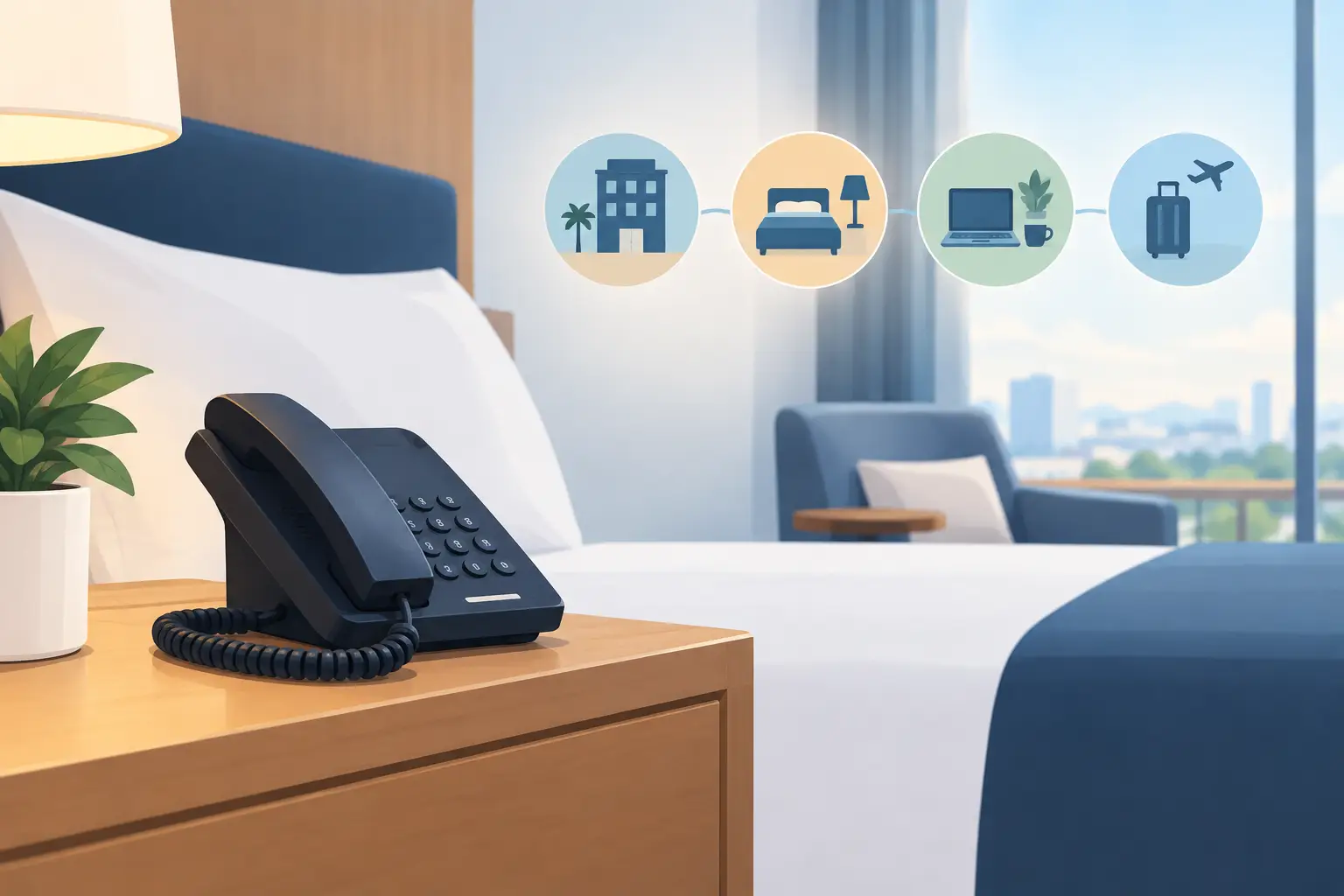
A guest picks up the handset at 2am because the air conditioning has stopped, they need a taxi for an early departure, or they simply want to speak to reception. In that moment, hotel guestroom phones should be immediately recognisable, comfortable to use and ready to connect. Their value is not measured only by call quality. A well-chosen phone also supports the room design, reinforces the hotel identity and gives guests a reassuringly direct route to help.
For boutique properties, the telephone can be one of the few functional objects left visible on a carefully considered bedside table or desk. For larger groups, it must still deliver a consistent standard across hundreds of rooms while meeting the requirements of the existing telephony infrastructure. The best specification begins by treating the guestroom phone as both an operational tool and part of the interior scheme.
Hotel guestroom phones are part of the room design
Hotel interiors work hard to create a sense of place. Furniture, lighting, fabrics and finishes all contribute to the first impression. A generic black handset can interrupt that story, particularly in heritage buildings, design-led city hotels and resorts where every detail has been selected with purpose.
A vintage-inspired telephone offers a more considered alternative. Traditional handset forms, rotary-style detailing and classic British design cues can bring warmth and character without asking the hotel to compromise on present-day requirements. Retro does not mean dated. The exterior may recall an earlier era, while the telephone itself is specified for an analogue line or a SIP/IP deployment.
The right style depends on the property. A grand country house may suit a classic desk phone in a colour that complements timber, brass and patterned textiles. A contemporary boutique hotel may use a cleaner push-button design in a single strong colour. In a resort, the telephone may need to feel distinctive yet understated enough to work across a broad room mix.
Colour is particularly useful when it is handled as part of the wider scheme rather than an afterthought. A phone can match a signature wall tone, pick up an accent colour from the headboard, or provide a restrained contrast on a bedside cabinet. Bespoke finishes are also valuable where a standard colour would dilute the designer's original intent.
Function comes before the final finish
A phone that looks right but does not suit the hotel's system creates unnecessary cost and frustration. Technical conversations should therefore begin early, involving the hotel's telecommunications specialist, integrator or IT team before a model, finish or quantity is finalised.
The first question is whether the property operates analogue extensions, a SIP/IP system, or a combination of both. Analogue hotel phones remain a practical choice for many established PBX installations. They are familiar, dependable and can be straightforward to deploy where the existing room wiring and infrastructure are already in place.
SIP/IP hotel phones connect through the network instead. They can suit new-build projects, major refurbishments and properties standardising on IP communications. However, an IP installation requires more than a compatible handset. Network configuration, power arrangements, provisioning, cable routes, VLAN settings and call-server compatibility all need to be checked. A project can gain useful flexibility from SIP/IP, but only when the wider system is planned properly.
It is tempting to choose the connection type on the assumption that newer is always better. That is rarely the right test. Retaining analogue may be the most sensible route when it works reliably, matches the PBX and avoids disruptive infrastructure changes. SIP/IP may be the better long-term choice where the hotel is already investing in a managed network or needs centralised configuration across multiple sites. The appropriate solution depends on the building, the current estate and the operational plan.
Everyday guest use should be effortless
Guests should not have to decode a complicated keypad to call reception, housekeeping or emergency services. Clearly marked service keys, sensible speed-dial programming and legible labelling make a genuine difference, especially for international guests, older travellers and anyone calling in a hurry.
Think through the calls a guest is most likely to make from that particular room. Reception will usually be essential. Depending on the operation, direct options for concierge, room service, spa, housekeeping or emergency assistance may also be appropriate. Too many labelled keys can look cluttered and confuse the user, so the aim is clarity rather than a long list of departments.
The placement matters too. A bedside phone supports night-time calls and accessibility, while a desk phone can be more useful in suites, business-focused rooms and serviced accommodation. Some hotels use one telephone per room; others need a second extension in larger suites or separate living areas. This should follow the room layout and service model, not a fixed rule applied everywhere.
Details that procurement teams should confirm
Before placing an order, confirm the line interface, connector requirements and compatibility with the hotel's PBX or IP platform. Ask how speed dials will be programmed, whether message-waiting indication is required and how the phone will be maintained after installation. If the project includes emergency-call procedures, establish exactly how calls route and what information the receiving team will have.
The physical environment deserves equal attention. Guestroom telephones need to withstand frequent cleaning, repeated handling and the occasional accidental knock. In coastal resorts, spa environments or high-turnover properties, finish durability and cleaning processes can affect the choice of material and colour. Housekeeping teams should be able to clean around the phone without making room servicing more complicated.
Procurement should also consider replacement planning. A distinctive model can become part of the brand standard, so it is useful to allow for future room additions, refurbishment phases and a small contingency quantity. This is particularly relevant for hotel groups that want a consistent look across several properties but may be upgrading them at different times.
Specifying hotel guestroom phones with brand value
A hotel telephone can carry more than a room number. Branded faceplates, dial labels or logo applications give the item a clear place within the property rather than making it feel like anonymous equipment. Done well, branding is subtle. It should support the guest experience, not turn the bedside table into an advertisement.
For independent hotels, a bespoke colour and discreet logo can make the room feel more complete and memorable. For international groups, customisation can help maintain brand consistency while allowing each property to select a model that suits its own architecture and interior direction. The balance is important: standardising every decision may be efficient, but it can also flatten the individual character that guests value.
GPO Retro works with hospitality projects requiring this combination of distinctive styling, analogue or SIP/IP options, and bespoke branding. For developers and designers, involving the telephone supplier while room standards are still being developed can prevent late compromises on colour, cabling or furniture placement.
A better briefing makes installation easier
The most productive project brief combines aesthetic and operational information from the outset. It should identify the number and type of rooms, proposed phone locations, preferred styles and colours, the telephony platform, required service keys, branding requirements and target installation date. Where a hotel is refurbishing in phases, include the phasing plan and any need to match existing equipment.
This gives the supplier, integrator and design team a common reference point. It also makes it easier to spot potential conflicts early, such as a chosen bedside table with insufficient cable access, an IP handset that needs network provision at a location designed only for analogue wiring, or a label layout that does not allow for the hotel's required service information.
For worldwide projects, local installation support and the availability of trade partners can also shape the rollout. Hotels should allow time for samples, technical approval, bespoke colour sign-off and any configuration work rather than leaving the telephone decision until the final furnishing schedule. The phone may be a small item in the room budget, but it touches several teams.
A guest may never comment on a telephone that works perfectly and suits its surroundings. That is often the point. It simply feels like it belongs there, ready whenever a real human connection is needed.