
Are Rotary Phones Compatible with Digital Lines?
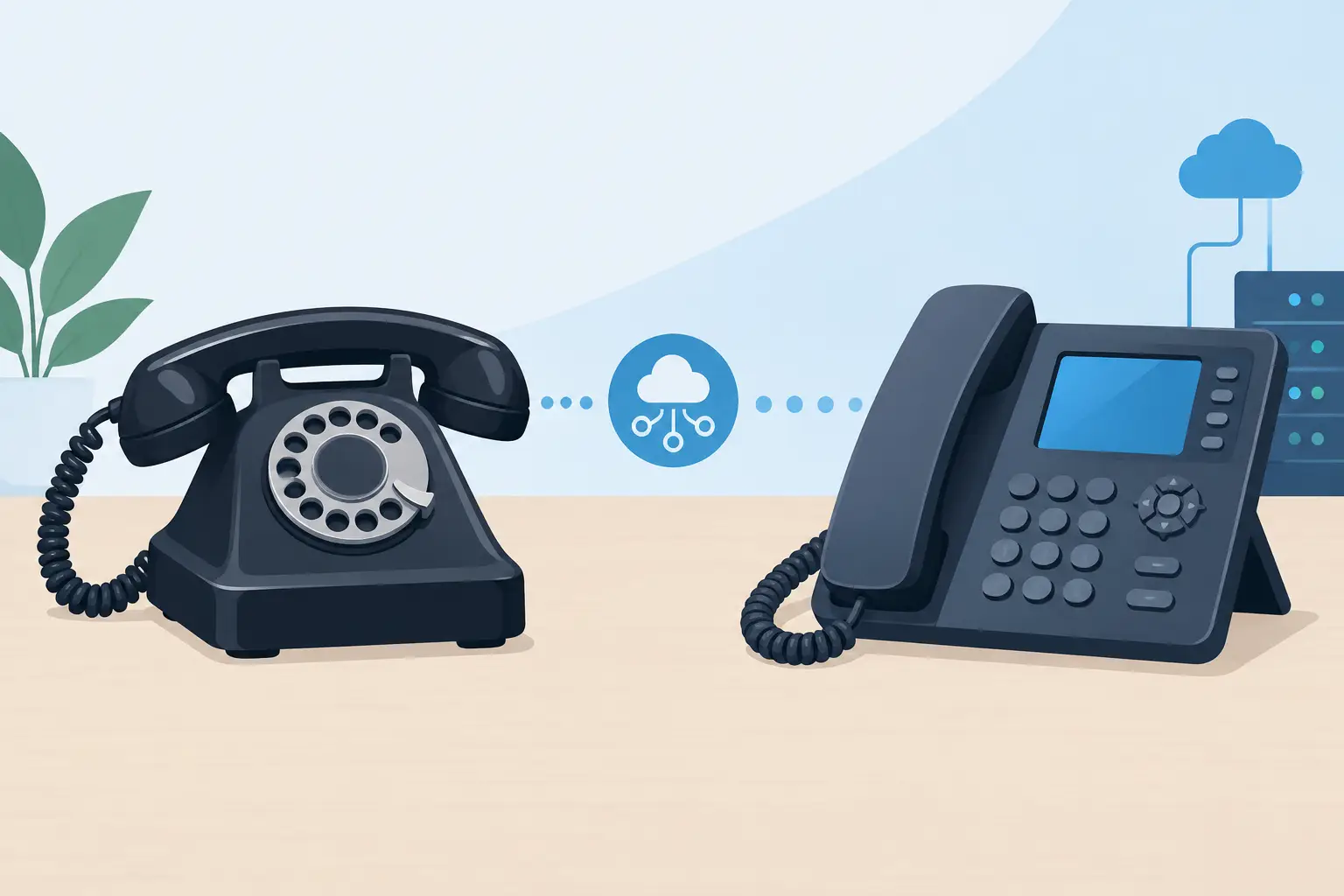
A classic rotary telephone can give a guest room immediate character, but are rotary phones compatible with digital lines? The practical answer is: sometimes, but not directly in every installation. Compatibility depends less on the dial’s appearance than on the signalling method behind it, the hotel telephone platform, and whether the handset is designed for modern analogue or SIP/IP operation.
For hotel projects, this distinction matters. A telephone that looks right but cannot reliably place calls, receive wake-up calls or support the required room-service functions is not a design solution. The good news is that heritage styling and contemporary telephony can work together when the specification is matched to the infrastructure.
What ‘digital line’ means in a hotel
The phrase digital line is often used to describe several different things. A hotel may have a cloud-based VoIP service, an on-premise IP-PBX, a legacy PBX with digital extensions, or an analogue extension network carried over a digital backbone. These are not interchangeable.
A traditional rotary phone expects an analogue telephone circuit. It receives power and ringing voltage from that circuit, then dials by interrupting the line in a series of pulses. A true digital extension port, by contrast, is usually intended for a particular manufacturer’s digital handset. Plugging an analogue rotary telephone into it will not make it work and may risk confusing fault diagnosis during commissioning.
An IP network is different again. A SIP/IP telephone connects to the data network and communicates using internet protocol. It does not use an analogue rotary mechanism, even if its exterior draws on the familiar form of a classic British telephone.
Are rotary phones compatible with digital lines through an adaptor?
They can be, provided the line is converted to analogue correctly. An analogue telephone adaptor, often called an ATA, presents an FXS port that behaves like a conventional analogue telephone socket. The adaptor then connects to the VoIP platform or IP-PBX. In this arrangement, the rotary phone is not communicating with the digital line directly. The adaptor is translating between the analogue handset and the digital service.
This can be an effective option for a small number of feature telephones, reception displays or individually styled guest rooms. However, it needs proper testing before a wider rollout. Not every ATA recognises pulse dialling reliably, and not every VoIP service accepts the dialled digits in the same way.
Some installations require a pulse-to-tone converter between the telephone and the adaptor. This reads the rotary pulses and sends DTMF tones instead. Where a property requires modern hotel calling features, this extra component can be the difference between an attractive installation and one that frustrates staff and guests.
The key issue: pulse dialling versus tone dialling
Original rotary telephones normally use pulse dialling, also known as loop-disconnect dialling. Each number produces a measured sequence of interruptions to the line. Modern analogue ports may still support it, but support is far from universal.
Most current PBX, hosted telephony and SIP services are designed around DTMF tone dialling. This is the familiar system where each button generates a distinct audible tone. Many vintage-inspired telephones, such as the GPO 746 Rotary Hotel Phone, combine a real rotary dial with tone dialling. For hospitality projects, that approach usually offers the visual impact of a rotary instrument with more predictable compatibility.
A physical dial alone does not confirm that a phone uses pulse dialling. The product specification should state whether it dials by pulse, DTMF, or offers both. That detail should be checked alongside the hotel’s telephony documentation, not after room installation has begun.
When an analogue rotary-style telephone is the right choice
An analogue rotary-style telephone can be an excellent fit where the hotel has analogue extension ports available, whether these are provided by a legacy PBX, a gateway, or ATAs connected to an IP system. It can suit boutique bedrooms, suites, public areas and themed properties where the telephone is part of the interior scheme rather than an item to hide away.
It is particularly practical when the property needs straightforward calling functions: reception, room-to-room calls, external access where permitted, and programmed service keys. The handset can be configured around the operational needs of the site while complementing the room’s furniture, finishes and brand story.
There are trade-offs. Analogue installations can require additional gateways, local power arrangements for the IP equipment, and careful cable management. If a hotel is building a new network from the ground up, an analogue deployment may not be the most efficient route for every room. It remains a valid choice when the design brief, existing cabling and required feature set support it.
When a SIP/IP hotel phone is the better fit
For new builds, major refurbishments and hotels standardising around an IP-PBX, a purpose-built SIP/IP hotel phone is often the cleaner option. It connects directly to the network and can support central provisioning, room-specific configuration and integration with the wider communications environment.
This does not mean sacrificing period character. Retro styling can be specified in a telephone designed for SIP operation from the outset. For a multi-room project, that avoids relying on individual adaptors and helps the technology scale in a more controlled way.
The decision should be driven by the property’s operational requirements. Consider whether the system needs voicemail indication, configurable keys, housekeeping or service-desk functions, emergency calling rules, handset replacement procedures and remote management. A telephone may be visually perfect, yet unsuitable if it cannot support the platform features that the hotel relies on daily.
Quick reference: which phone for which line?
| Your hotel line | Original rotary phone (pulse only) | Rotary-style phone with tone dialling | SIP/IP retro phone |
|---|---|---|---|
| Analogue PBX extension | Only if the PBX accepts pulse dialling | Yes, e.g. the GPO 746 Rotary Hotel Phone | No, needs an IP network |
| VoIP via an ATA adaptor | Only if the ATA supports pulse, or with a pulse-to-tone converter | Usually yes, once tested on the ATA | Not needed; connect directly instead |
| IP-PBX or hosted/cloud system | No | Only through an ATA or gateway | Yes, e.g. the GPO 746 Push Button SIP or GPO Carrington SIP |
| Proprietary digital extension | No | No | No; use the PBX maker’s handsets or a gateway |
With the UK’s analogue phone network being switched off, many hotels are reviewing this now. Our PSTN switch-off guide for hotels explains the options.
Checks to make before specifying rotary telephones
The most reliable projects start with a short technical review involving the hotel, its telecommunications provider and the telephone supplier. Establish whether each room position is analogue, digital-proprietary or Ethernet-based. If it is analogue, confirm the expected line voltage, ring cadence and supported dialling type. If it is VoIP, identify the approved ATA or gateway and verify pulse-dial support where required.
Also check the calling plan. Guest-room phones may need restricted external dialling, direct access to reception, emergency numbers, voicemail access or dedicated service buttons. A rotary dial can be charming, but it is slower for long dial strings and does not automatically provide the one-touch functions expected in many hotels. Purpose-designed memory keys or carefully programmed platform features may be needed.
Physical installation deserves equal attention. Confirm the required connector type, cable route, desk or wall position, and how the telephone will be secured in a busy guest environment. If the project includes custom colours or branded faceplates, approve samples early so the final finish sits naturally with the room scheme and withstands regular housekeeping.
Finally, test a representative room before committing to volume. Make inbound and outbound calls, test reception and emergency routing, check ringing volume, assess speech quality and confirm that the dial works consistently. Repeat the test with the exact PBX, gateway and service configuration planned for deployment. A bench test on a different line is useful, but it is not a substitute for a live-room trial.
Common compatibility mistakes
The most common error is treating every socket as a standard telephone socket. A digital PBX extension may use a plug that looks familiar, but its electrical signalling can be proprietary. Another frequent issue is assuming that any VoIP adaptor supports rotary pulse dialling. Many do not, or they require a specific setting that has not been enabled.
Hotels can also overlook power resilience. An analogue phone connected to a traditional PBX may continue to operate during some local power events, depending on the system design. A VoIP solution involving switches, routers and ATAs has different resilience requirements. The site’s contingency plan should reflect the chosen architecture, particularly for reception and emergency communications.
A design-led answer, not a compromise
For hospitality, the best question is not simply whether a rotary phone will work on a digital line. It is whether the chosen telephone and connection method will deliver the guest experience, operational function and visual identity the property requires.
GPO Retro works with hospitality projects where classic styling needs to sit confidently alongside analogue or SIP/IP telephony. Whether a hotel retains analogue extensions, uses conversion hardware, or specifies IP handsets throughout, the right route begins with the system type and ends with a tested room solution. Get those details right early, and a telephone with genuine presence can remain a practical part of the guest room rather than a nostalgic complication.
Frequently asked questions
Will an old rotary phone work on VoIP?
Not directly. It needs an analogue telephone adaptor (ATA) that supports pulse dialling, or a pulse-to-tone converter. Test it on your exact system first.
What is the difference between pulse and tone dialling?
Pulse dialling sends each digit as a series of clicks on the line; tone (DTMF) dialling sends a distinct tone per digit. Most modern phone systems expect tone dialling.
Can a hotel have the rotary look on a SIP system?
Yes. Choose a retro phone built as a SIP phone, or a rotary-style phone with tone dialling connected through an ATA.
Planning a hotel phone project?
Browse our SIP/IP hotel phones and analogue hotel phones, see hotels using GPO phones, or request a quote for your property.