
Retro Phones for Hotel Rooms: Choosing a Style for Your Property
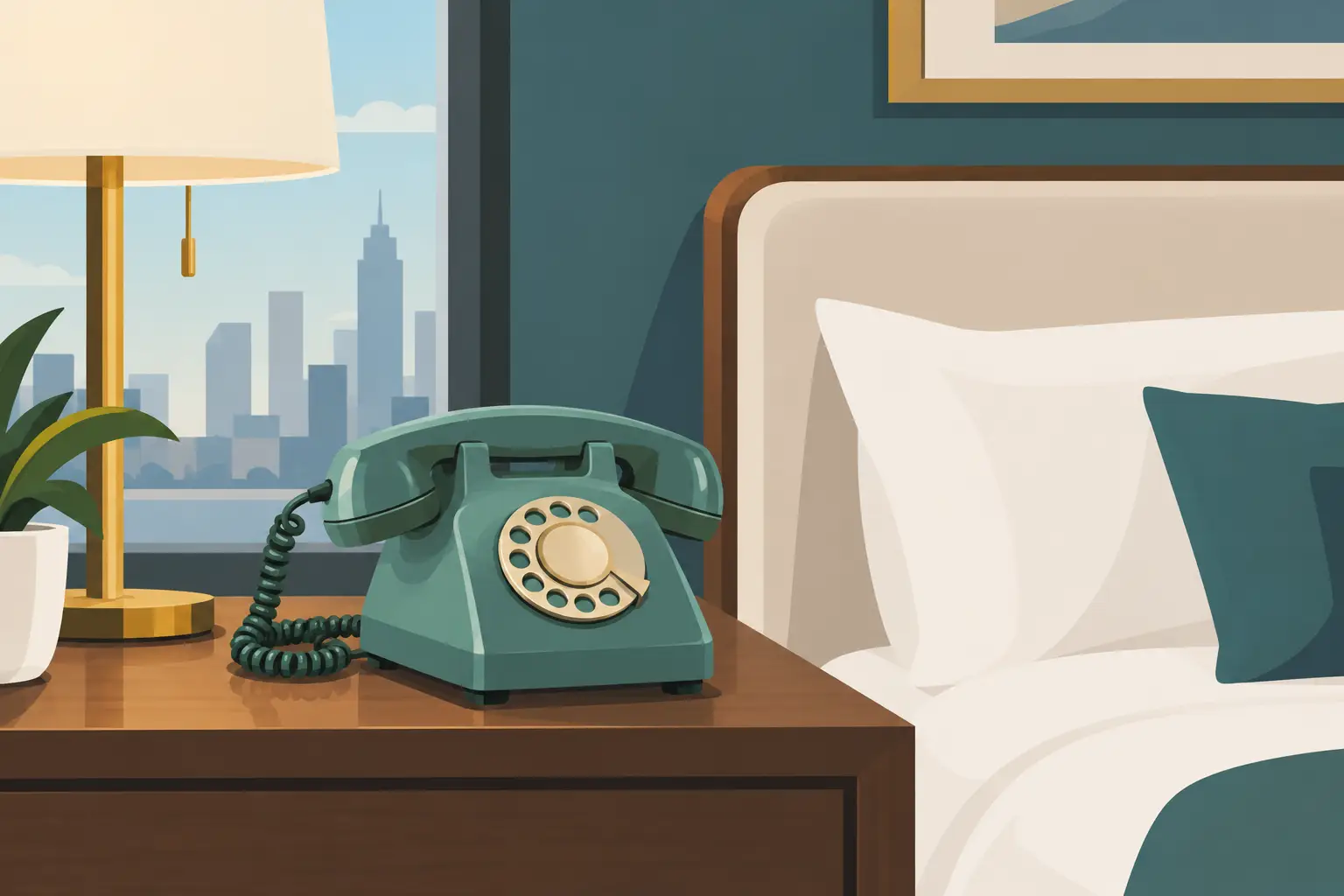
A guest notices the telephone before they make a call. Set beside the bed, it is one of the few functional objects that remains clearly visible in the room. A standard plastic handset can disappear into the background. Retro hotel phones do the opposite: they give the guest room a sense of place, reinforce the interior scheme and make a practical point of contact feel considered.
For hotel owners, designers and technical teams, that appeal only matters when it can be specified with confidence. A telephone must suit the property’s infrastructure, stand up to frequent use and support a consistent room standard across the estate. The strongest retro telephone projects balance heritage styling with clear operational requirements.
Retro phones are part of the room experience
Hotel design is built from small signals. Lighting, bedside furniture, signage and accessories all tell guests what sort of stay to expect. A vintage-inspired telephone can add warmth to a country house hotel, a playful note to a boutique city property or a period-appropriate detail to a heritage building.
Unlike a purely decorative object, however, the telephone has a job to do. Guests may use it to contact reception, room service, housekeeping or emergency support. That makes its presence more powerful than an ornament. A distinctive handset is easy to identify, intuitive to pick up and more likely to feel like an intentional part of the room rather than an afterthought.
This is where retro styling earns its place commercially. It creates a memorable touchpoint without asking the hotel to compromise on the practical value of an in-room phone. The trick is to apply a familiar visual language to the way hotels operate now.
Start with the hotel telephone system
The first question is not which finish looks best. It is what the telephone needs to connect to. Early agreement between the interior team, operator, M&E consultant and telecoms specialist avoids costly changes once rooms are furnished.
Analogue installations
Many hotels continue to operate analogue extensions, particularly in established properties where the existing PBX remains suitable for the site. Analogue retro phones can be a straightforward fit for these installations, offering the character of a classic design with the dependable function required in a guest room.
The detail still matters. Teams should confirm the line type, required dialling method, feature compatibility and whether a message waiting indicator or programmable service keys are needed. A phone that looks right but cannot support the hotel’s calling plan will become a problem for both guests and staff.
SIP/IP and VoIP installations
For new builds, refurbishments and larger technology upgrades, SIP/IP telephony is often the preferred route. It can support central management, flexible deployment and integration with modern hotel communications platforms. A SIP/IP retro telephone allows a property to retain a distinctive period look while working within a contemporary networked environment.
Specification should cover power requirements, network connections, provisioning approach and compatibility with the selected PBX or hosted platform. It is also worth establishing who will manage configuration during installation and after handover. Design-led equipment performs best when technical ownership is equally clear.
There is no universal answer between analogue and SIP/IP. The right choice depends on the building, the existing infrastructure, the scope of the refurbishment and the hotel’s longer-term technology plan. What matters is choosing a telephone range that offers an appropriate option rather than forcing a design decision onto the wrong system.
Choose a design that supports the property story
A retro telephone should belong in the room, not compete with it. The most successful projects start by defining the role the product will play in the wider scheme.
In a Victorian townhouse hotel, an elegant rotary-style silhouette may complement dark timber, brass and layered fabrics. In a coastal resort, a softer colour palette can bring personality to pale woods and relaxed upholstery. A contemporary boutique property may use a bold handset colour as a deliberate contrast against minimal interiors.
Colour is particularly useful when it is treated as part of a controlled design system. Matching telephones to accent colours, reception details or room categories can create continuity without making every space identical. Bespoke colours can also help a hotel express its own identity where an off-the-shelf finish is too generic.
Durability should remain part of that conversation. Guest-room phones are handled by many different people, cleaned regularly and exposed to the everyday knocks of hotel use. A finish needs to look good under real operating conditions, not only in a sample presentation.
Matching the phone to your property
| Property type | Style that suits it | GPO models to consider | Colour ideas |
|---|---|---|---|
| Country house or heritage hotel | Rotary dial, classic proportions | GPO 746 Rotary Hotel Phone | Black, ivory or green against timber and brass |
| Victorian or Georgian townhouse | Traditional desk phone with a period feel | GPO 200 Push Button SIP or GPO Duke SIP | Black |
| Coastal or resort hotel | Softer, relaxed colours | GPO 746 Rotary Hotel Phone | Mint, azure blue or ivory |
| Contemporary boutique hotel | A bold colour as a deliberate contrast | GPO 746 Push Button SIP or GPO 746 Rotary Hotel Phone | Red, mustard, orange or carnation pink |
| Compact rooms with little surface space | Wall-mounted to free the bedside table | GPO 746 Wallphone SIP | Black or red |
The GPO 746 Rotary Hotel Phone comes in 11 colours: black, blue, grey, ivory, mint, green, mustard, orange, red, carnation pink and azure blue. Other GPO models can be made in other colours on request.
Branding can make a standard room feel more considered
For branded groups and independent hotels alike, the telephone is a useful but often overlooked branding surface. A discreet logo, customised faceplate or tailored service labels can make the unit feel designed specifically for the property.
The best hotel branding is useful as well as attractive. Clearly marked reception, concierge or emergency functions reduce uncertainty for guests. Consistent terminology across rooms helps staff support the guest journey, especially where the hotel operates multiple buildings, room types or locations.
There is a balance to strike. Too much branding can make a carefully designed telephone feel promotional. Too little can leave a guest unsure how to reach the services they need. A considered layout, aligned with the hotel’s graphic standards, is usually more effective than adding every possible instruction to the handset or base.
For projects requiring custom colours, logo branding or dedicated key layouts, allow time for approvals and samples. A physical sample can reveal issues that a digital visual will not, such as legibility, contrast, finish and how the product sits against bedside furniture.
Plan for the guest room, not just the procurement schedule
Telephone selection is often left until late in a refurbishment, after furniture and technical decisions have already been made. That can create avoidable pressure around cabling, socket positions, furniture apertures and delivery timings.
Bringing the telephone into the room-set discussion earlier gives the project team more control. Consider where the phone will sit when a guest is in bed, whether the cord length is suitable, how the unit will be cleaned and whether the handset is comfortable for guests of different ages and abilities. The bedside location should also allow staff to access the phone without moving heavy furniture or disturbing other room equipment.
Operational teams can add valuable insight here. Housekeeping will know whether a proposed finish shows marks easily. Reception can identify the most common guest calls. Maintenance teams can advise on access, replacement requirements and the realities of supporting equipment across a busy hotel.
This does not mean every room needs the same telephone. Suites, accessible rooms, serviced flats and public areas may require different features or placement. The aim is to maintain a coherent visual language while specifying each unit for its actual use.
Work with a supplier that understands both sides of the brief
A hospitality telephone project sits between design and infrastructure. Suppliers need to understand the visual ambition, but also the practical questions around deployment, compatibility, branding, quantities and ongoing support.
GPO Retro works with hotels and trade partners on vintage-inspired telephone solutions for analogue and SIP/IP environments, including custom colours and branded options. That combination matters when a project involves more than selecting a catalogue finish. It allows the telephone to be considered as part of the hotel’s technical and design specification from the outset.
For international projects, consistency is equally valuable. Hotel groups, developers and distributors need clarity on product availability, lead times, regional deployment requirements and repeatability across sites. A well-managed specification makes it easier to protect the original design intent as a project moves from sample room to full rollout.
A telephone may be a modest item within a larger fit-out, but it has an outsized effect on how complete a room feels. Specify retro phones early, match them carefully to the system behind the wall and the story in front of it, and they become more than a nostalgic detail. They become a useful, lasting expression of the hotel itself.
Frequently asked questions
Do retro phones work with modern hotel phone systems?
Yes. GPO makes classic designs as analogue phones for analogue PBXs and as SIP phones for IP and cloud systems.
Which retro phone suits a boutique hotel?
It depends on the interior. A rotary GPO 746 suits heritage rooms; a bold-coloured GPO 746 suits a contemporary boutique hotel as a statement piece.
Can retro hotel phones carry our logo?
Yes. GPO offers custom colours and logo branding for hotel projects.
Planning a hotel phone project?
Browse our SIP/IP hotel phones and analogue hotel phones, see hotels using GPO phones, or request a quote for your property.