
Vintage British Telephone Design for Hotels: The Classic Styles Explained
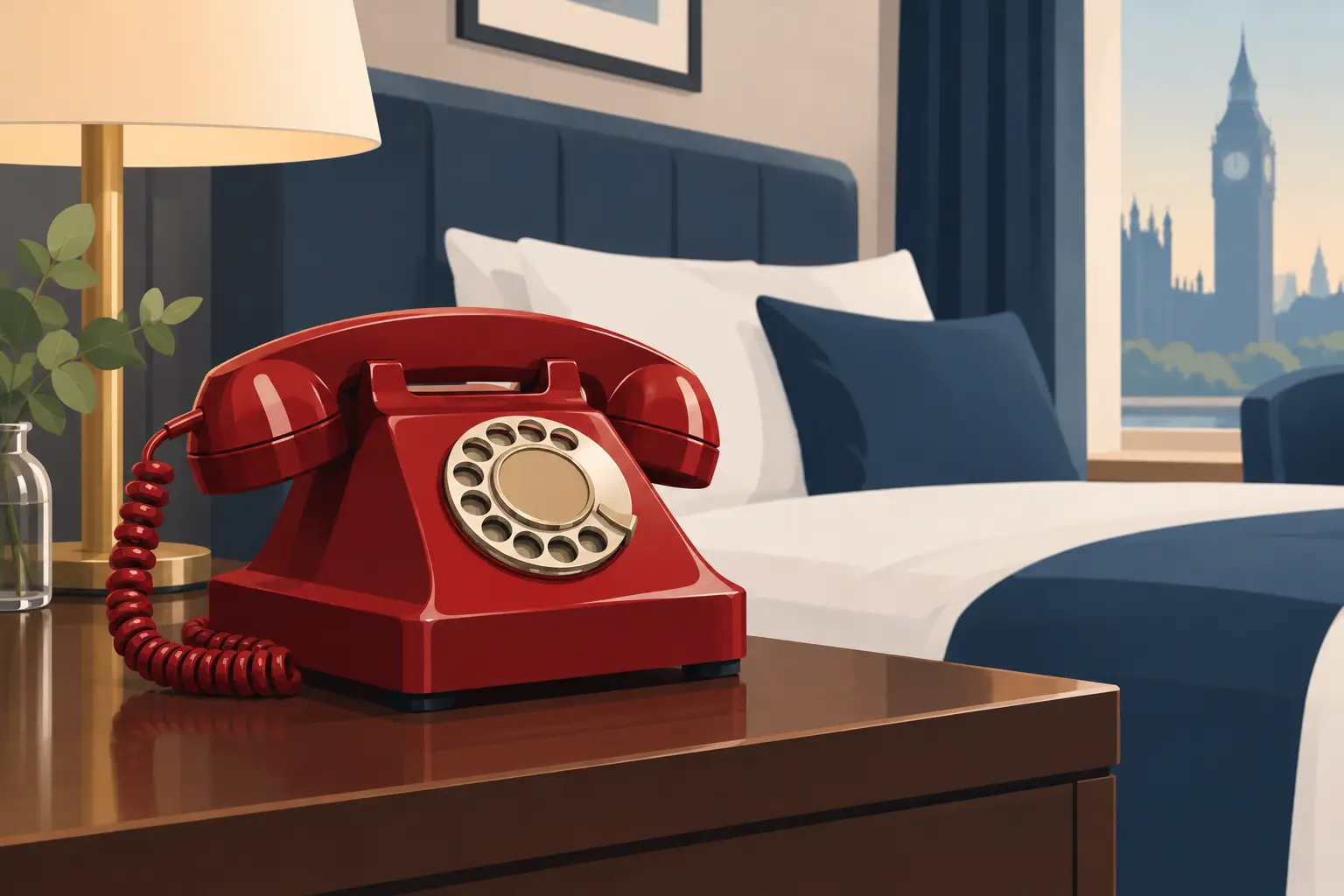
A vintage British telephone can do more than complete a bedside table. In a hotel setting, it becomes part of the guest’s first impression of the room: a recognisable object with weight, character and a clear purpose. The strongest projects pair that familiar British design language with the requirements of a modern property, from dependable room-to-PBX calling to colours, branding and installation formats suited to the wider scheme.
For hotel owners, designers and technical teams, the question is not simply whether a retro telephone looks right. It is whether it will work properly on the property’s chosen infrastructure, stand up to daily use and add value to the guest experience without creating an operational headache.
Why a vintage British telephone still earns its place
Classic telephone styling has an immediate emotional pull. A traditional handset, rotary-inspired dial or neatly proportioned push-button telephone can make a newly built room feel considered rather than generic. It speaks particularly well to heritage hotels, country houses, boutique city properties, coastal resorts and independently designed serviced accommodation, but it is not restricted to period interiors.
Placed against contemporary joinery, marble, bold wallpaper or restrained neutral tones, a vintage-inspired telephone introduces contrast. It gives guests something familiar to use and something memorable to photograph, while helping a room avoid the anonymous feel of standard contract equipment.
That visual impact must be supported by practical design. A hospitality telephone needs a stable base, a handset that feels comfortable over repeated calls, clear labelling and buttons that guests can use without explanation. The most successful specification takes the charm of a classic British telephone and applies it to the everyday demands of a working hotel.
The classic British designs, and their hotel versions
GPO Retro’s hotel phones draw on designs many guests will recognise from British homes and offices. Each is available in a version built for hotel systems.
| Design | What it is known for | Hotel versions |
|---|---|---|
| GPO 746 | The familiar British home telephone of the 1970s, with its rounded body and rotary dial | GPO 746 Rotary Hotel Phone (analogue), GPO 746 Push Button SIP, GPO 746 Wallphone SIP |
| GPO 200 | A redesign inspired by the classic Bakelite telephone | GPO 200 Push Button SIP |
| GPO Carrington | A classic upright telephone with a compact footprint | GPO Carrington SIP |
| GPO Duke | A traditional desk telephone with a solid black finish | GPO Duke SIP |
Vintage British telephone options for modern hotel systems
The first decision is technical. A telephone may look traditional, but its connection type must match the building’s communications estate. This is where early coordination between interior design, procurement, the hotel operator and the telecommunications installer matters.
Analogue telephones for existing PBX estates
Analogue models remain a practical choice for hotels using compatible analogue extensions, including many established PBX installations. They can be straightforward to deploy where cabling and room extensions are already in place, and they offer a familiar, direct approach to guest-room calling.
An analogue route can be especially sensible during a refurbishment where the existing telephone system is staying in service. It may reduce disruption and avoid unnecessary changes to infrastructure. However, teams should confirm line compatibility, required features and any dialling configuration before ordering. A telephone that works well on one analogue estate may need different settings or wiring on another.
SIP/IP telephones for connected properties
For new-build hotels and projects moving to IP telephony, SIP/IP models bring vintage styling into a networked environment. These telephones are designed to operate with compatible SIP platforms and can support the operational model of a contemporary property, provided the handset, network and PBX or hosted platform are specified together.
The benefits can include central management, flexible extension provisioning and alignment with an IP-led technology strategy. Yet SIP/IP is not automatically the right answer for every project. Network readiness, switch capacity, power arrangements and installer capability all need consideration. Some installations use Power over Ethernet, while others may require local power, depending on the model and site design.
The important point is simple: choose the connection type for the hotel’s infrastructure first, then select the vintage finish and feature set that suit the interior. Appearance and compatibility should be specified together, not treated as separate workstreams.
Specify for the guest room, not just the mood board
A beautiful telephone can still be the wrong hotel telephone if it fails at the bedside. Guest-room specification should begin with the calling journey. Can the guest clearly contact reception? Is there a simple way to reach emergency services where applicable? Are essential service numbers labelled in a way that fits the brand while remaining legible? Will housekeeping be able to clean around the unit easily?
Direct-access keys are often useful for reception, concierge, housekeeping or room service, although the right selection depends on the operating model. A limited-service property may need only a clearly marked reception key, while a full-service hotel may require several programmed contacts. Too many buttons can look cluttered and create confusion, so this is a case where more functionality is not always better.
Placement deserves equal attention. A telephone may sit on a bedside table, work desk or console, but it should not compete with charging points, lighting controls, guest directories or accessibility requirements. Cable routing should be considered before furniture is finalised. Visible, tangled leads quickly undermine even the best interior concept.
For accessible rooms, usability should be discussed with the project team at the outset. Features such as high-contrast labelling, clear button spacing, handset comfort and appropriate positioning can make a meaningful difference. The result should feel integrated with the scheme rather than like an afterthought.
Bespoke colour and branding turn equipment into a design detail
Hospitality projects rarely work in standard shades alone. A telephone in a carefully selected colour can echo joinery, fabric piping, tiling or the property’s visual identity. For some hotels, a deep heritage green, warm cream or polished black suits the room story. Others may need a brighter signature colour that carries across multiple sites.
Custom colour should be specified against an approved reference, with sample review where the finish is critical. Lighting changes perception: a tone that appears soft grey in a showroom can look blue under cool room lighting or warmer beside natural timber. It is worth checking a physical sample in context before committing across dozens or hundreds of rooms.
Logo branding adds another layer of distinction. A discreet property mark on the telephone can reinforce brand recognition without turning a practical guest-room item into advertising. The most effective applications are restrained and placed with purpose. A logo must remain clear after regular cleaning, while leaving essential button labels easy to read.
For multi-property groups, bespoke telephones can also support brand consistency. The core handset may remain consistent across the estate, with colour, logo treatment or programming adapted for each hotel. This balances a recognisable group standard with enough flexibility for individual properties to retain their own character.
Plan procurement around deployment, not arrival date
A hotel telephone project is rarely just a product purchase. It involves room counts, sample approval, technical configuration, lead times, delivery coordination and installation. Leaving the decision until furniture is being placed in bedrooms creates avoidable pressure, particularly where custom colours, logos or programmed keys are involved.
Start with a room schedule that identifies each location and telephone requirement. Guest rooms, suites, reception desks, back offices and service areas may need different formats or programming. Confirm whether every room has the same layout, whether accessible rooms require an alternative specification, and whether the project includes future phases that should match the first installation.
Before sign-off, commissioning should check four practical points:
- each telephone is connected to the correct extension and can place and receive calls;
- programmed service keys reach the intended department;
- labels and branding are correct, legible and consistent by room type;
- the physical installation is secure, clean and positioned as approved.
This process sounds basic, but it protects the guest experience. A beautifully styled handset that calls the wrong department, has an outdated service label or sits on an unstable surface will be noticed for the wrong reasons.
Choose a partner that understands both sides of the brief
Hospitality teams need more than a catalogue image. They need confidence that a design-led telephone can be supplied in the appropriate format, considered against the project’s system requirements and delivered consistently across a room programme. That is particularly relevant for international projects, where local technical standards, distributor coordination and phased openings can add complexity.
GPO Retro works with hotel operators, designers, integrators and trade partners on vintage-inspired analogue and SIP/IP telephone requirements, including bespoke colours and branded hospitality projects. The value lies in treating the telephone as both a functioning communications point and a visible piece of the interior.
A well-specified vintage British telephone gives guests a small but tangible sign that the hotel has paid attention to detail. When design, compatibility and day-to-day usability are resolved together, it becomes one of those quiet room features that feels entirely natural to use and difficult to forget.
Frequently asked questions
What is a GPO telephone?
GPO stands for General Post Office, which ran the UK telephone service for decades. GPO Retro’s phones are modern telephones in those classic British designs.
Are vintage-style hotel phones reliable?
Yes, when specified for the hotel’s system. GPO hotel phones are modern analogue or SIP/IP telephones in classic designs, not restored antiques.
Can vintage British phones work on SIP systems?
Yes. The GPO 746, GPO 200, Carrington and Duke designs are available as SIP phones.
Planning a hotel phone project?
Browse our SIP/IP hotel phones and analogue hotel phones, see hotels using GPO phones, or request a quote for your property.